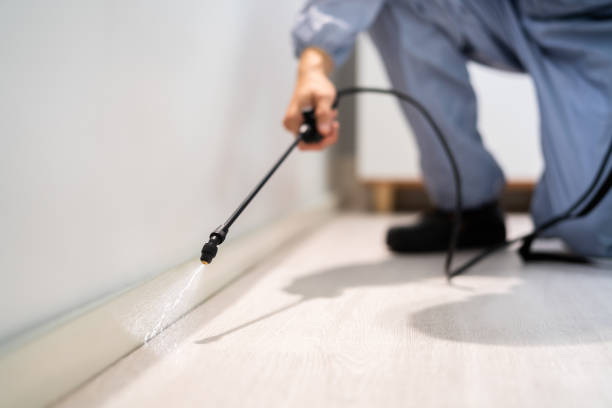
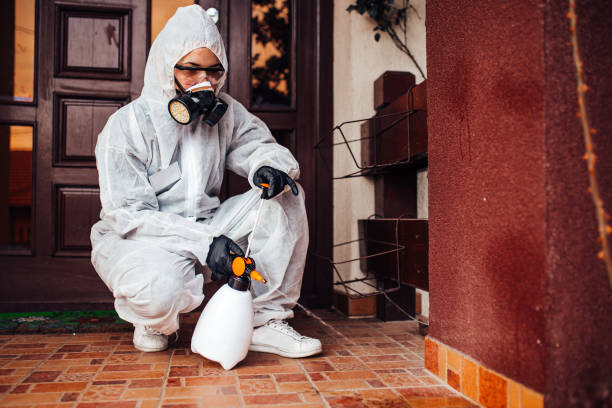
When drywood termites or stored-product pests are distributed throughout a structure, whole-building fumigation reaches what spot treatment can't. We treat the decision to fumigate as a serious one, and part of our job is helping you understand honestly whether it's actually necessary first.


Our team is specifically licensed for fumigant handling, tenting procedures, and clearance protocols under state regulation.
Fumigation scheduling accounts for the full vacate-and-return window, coordinated with your timeline as closely as possible.
Pricing is based on structure cubic footage and infestation type, quoted in writing before tenting begins.
We use commercial-grade tarps, sealing materials, and gas detection equipment to monitor fumigant concentration throughout treatment. We also coordinate directly with your property insurance if documentation of the infestation and treatment is needed for a claim.
When drywood termite activity is spread through multiple structural members, tenting reaches every void spot treatment can't.
We treat stored-product pest infestations that have spread beyond what sealing and trapping can reasonably address.
Proper preparation before tenting is critical for safety and effectiveness; we provide a clear prep checklist ahead of the date.
Licensed application of structural fumigant under tent, monitored continuously for concentration and structural seal integrity.
Gas-level testing confirms the structure is safe before removing tents and clearing the property for re-entry.
A follow-up visit confirms elimination and addresses any remaining conducive conditions once you've moved back in. We never rely on a single gas monitor during clearance testing — redundancy is part of the safety protocol itself.

Tell us about the infestation scope and structure size so we can determine if fumigation is the right approach versus spot treatment.
We assess the property firsthand before recommending fumigation, since it's a bigger undertaking than routine treatment.
You'll get a complete schedule spelling out prep steps, tenting duration, and exactly when re-entry clearance happens.
After tenting and clearance testing, we confirm the structure is safe for re-entry and schedule a post-treatment follow-up.
Drywood termites had spread through multiple rooms — spot treatment wouldn't have cut it. Tenting process was well-organized start to finish.
They coordinated the whole timeline around our hotel stay so we knew exactly when to leave and return.
Warehouse had a stored-product pest problem that had gotten out of hand. Fumigation and clearance testing got us back operating fast.
Appreciated the detailed prep checklist beforehand — nothing was left to guesswork about what needed to be removed.
Historic home with extensive drywood termite galleries throughout the attic framing. Fumigation was the only realistic option and it was handled professionally start to finish.

We provide licensed structural fumigation across Malvern and the broader Malvern, PA area, coordinating scheduling for both residential and commercial properties. Multi-family and commercial structures in Malvern sometimes require phased tenting schedules, which we coordinate directly with property management. Before scheduling, we check whether your neighborhood or building has specific tenting notification requirements, so there are no surprises with neighbors or an HOA.

Regular treatment addresses localized activity; fumigation is reserved for infestations spread too widely through the structure for spot treatment to reach.
The vacate period is usually short but firm; we provide precise dates once the fumigation plan is finalized.
Food, medications, and certain plants generally need to be removed or specially bagged — we provide a complete prep checklist ahead of time.
Yes — licensed fumigation follows strict regulatory protocols specifically designed to treat structures safely without damage.
Clearance testing measures fumigant gas levels before tents come down, and re-entry isn't authorized until levels are fully safe.
Fumigation eliminates existing infestation; we also flag conducive conditions afterward to help reduce the odds of reinfestation. It also helps to schedule any planned pest treatment for neighboring structures around the same window, since shared walls can otherwise reintroduce activity.
A licensed inspection will tell you honestly whether fumigation is actually necessary for your situation.
Call +1-844-564-2570